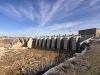
In Southern Idaho, the roads are often dirt, the bright blue sky is expansive, and the soil is terracotta hued. Where crops and livestock don’t border the road, sagebrush grows.
Widely regarded as one of the United States’ renowned agricultural hubs, the area houses hundreds of farms and hundreds of thousands of acres of farmland. As a semi-arid high‑desert region, balancing water conservation with consumption requires deep insight into water availability.
From Milner Dam to King Hill, North Side Canal Company manages Southern Idaho’s irrigation water. In addition to delivering water to more than 160,000 acres of farmland, the canal company’s extensive operations also include functions such as water recharge for the state of Idaho and water accounting.
Operationally, their mandate is threefold:
- Manage water delivery for their constituents.
- Decrease spillback to the Snake River.
- Conserve water resources.
Challenge: Visibility into System Health and Canal Maintenance
Meeting this mandate required granular visibility into both water resources and canal system health. In the 2000s, North Side Canal Company relied on manual monitoring. Ditch riders—personnel who patrol and inspect irrigation systems—visited each site every one to two days, which meant canal breaks and water delivery issues often took an average of 24 hours to detect. During that time, water was lost, deliveries were interrupted, and maintenance and labor costs increased.
Managing a 900-mile canal system added further complexity. Conditions could vary widely across the system, and localized weather events often created problems before they were noticed. For example, high winds in one area could push vegetation into the canal, creating jams that caused overflows and interrupted water delivery.
These operational challenges, combined with the ongoing costs of wasted water, delayed response times and necessitated labor-intensive monitoring. North Side Canal Company actively sought a better solution. They needed an approach that would conserve water, reduce time spent responding to issues, and deliver long-term operational value.
Solution: Automating Monitoring and Control Systems
In 2011, Alan Hansten, manager at North Side Canal Company, set out to revolutionize how the organization managed water. After seeing success in nearby irrigation districts and companies using Campbell Scientific data loggers, he wanted to see the results firsthand.
As the “brains” of a monitoring and control system, a data logger is responsible for monitoring a wide range of sensors and automatically controlling gates and other instruments. Longevity, accuracy, and durability (especially in harsh conditions) are key to operational success in wide-spread irrigation and water management applications.
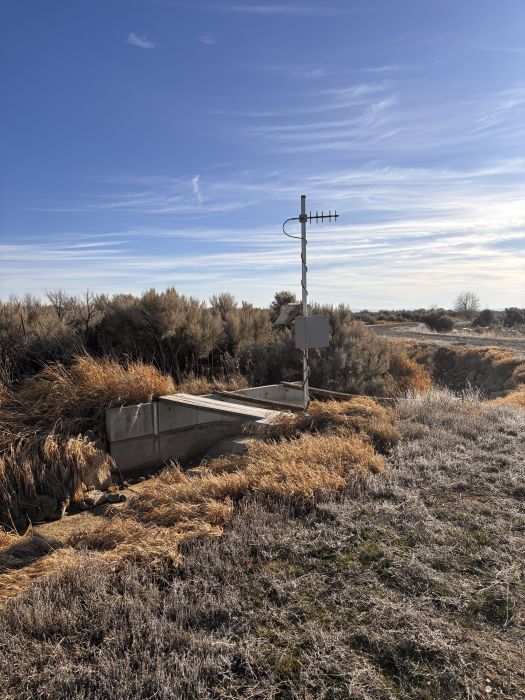
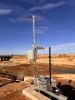
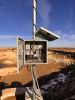
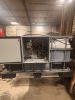
Today, 114 Campbell Scientific gauging sites, each with a unique purpose, are scattered across North Side Canal Company’s expansive canal system. Some systems monitor and control gates, weirs, or chemical injection sites. Others are located at key monitoring points, such as diversions.
Results: Scalable, Manageable, and Accurate
Scalable
Large networks, such as this one, often aren’t built over the course of a day, week, or even a year. To maximize their investment, North Side Canal Company needed data logger capability that could grow and scale with them, even as technology changed. Over time, they built their network on a range of dependable, hard-working data loggers, from older but still operational loggers that include the CR200 and CR800-series to the current CR1000-series and CR350.
“We’ve been able to build the system over the course of years because we didn’t have to go back and take out some of the stuff we did 15 years ago to keep it alive,” said Hansten. “We can keep it going and spend our money on newer sites and continue to build and expand the system and make it bigger because that old equipment is out there still chugging away.”
North Side Canal Company’s data loggers easily integrate with not only Campbell Scientific sensors, but also most third-party instruments. This allows the company to pick and choose their own sensor suite, rather than being locked into a single vendor for the system’s lifetime.
Manageable
Data, while valuable alone, are a significant improvement when paired with data management, visualization, alerts, and alarm tools. North Side Canal Company uses LoggerNet Data Logger Support Software to program their data loggers, manage their data, and control their systems. The company has set up alerts—sent via email notification to ditch riders and the watermaster—to notify them of potential issues, such as low pool or a declining battery voltage.
Tom Bogulsawski, the IT manager at North Side Canal Company, has custom-built a supervisory and control data acquisition (SCADA) system on top of LoggerNet to expand visibility even more. While ditch riders continue to visit sites regularly, they can detect issues in real time using the SCADA interface, accessing the information via smartphones, tablets, and computers.
Today, the average problem detection and response is three to six hours, a sharp reduction from the 24 hours when issues could only be seen during a site visit. As Bogulsawski put it, now “drive time [to the site] is the longest part” of detecting and repairing issues.
Accurate
Since implementing the system, delivery accuracy has naturally improved. By automating monitoring for stage and flows, the organization has more insight into where water is being used. With gates controlled by the data logger, they can also better manage where water is moving.
“[This system] helps us manage the resource more accurately,” said Hansten.
A Trusted Partner in Water Management
Hansten shared two pieces of advice for districts and other organizations who want to automate their irrigation monitoring and control systems:
- Look for excellent technical support. Choose a vendor who is ready to help with behind-the-scenes support. As Hansten notes, “What we’ve found [is that] we can call [Campbell Scientific’s] programmers and tech folks down there, and they’ll help us with code if we have a glitch.”
- Train the team to use the system. By training the entire team at North Side Canal Company to operate the data loggers, software, and system, Hansten has seen efficiency increases, and he spends less time managing the system.
Hansten, Bogulsawski, and the rest of the team at North Side Canal Company now have more insight into water management than ever before. They continue to expand their monitoring and control sites, adding even more resolution to their water data.
Case Study Summary
Application
Balancing water conservation with consumptionLocation
Southern IdahoProducts Used
CR350 CR200 CR850 CR800 LoggerNet CR1000X CR1000Participating Organizations
North Side Canal CompanyRelated Website
North Side Canal CompanyView the PDF